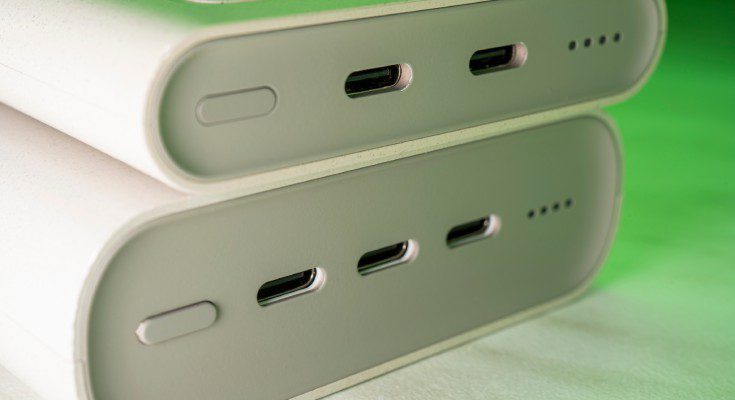
After countless travels, you might feel like a pro when it comes to packing. But there’s always something new to learn. Whether you’re driving to another state for a camping trip or flying across the country for a concert, everything you bring should count.
Innovations in compact tech design enable travelers to bring high-performance devices without the bulk. Engineers focus on shrinking internal components while maintaining efficiency for these active environments. Here is what you should know about various tech industry improvements and how they can change the way you pack for your next trip.
Power Regulation Efficiency
Portable electronics rely on precise power management to minimize physical battery size. Engineers achieve this by integrating advanced voltage regulation directly into microscopic circuit boards. This component manages the energy flow from the battery to the processor.
DC-DC converters have changed portable tech by stepping down voltage with minimal energy loss as heat. By converting voltage efficiently, devices avoid thermal throttling, which slows down performance during intensive tasks. They extend battery life for GPS units and cameras during extended trips.
Advanced Material Engineering
Manufacturers favor aerospace-grade aluminum and carbon fiber over heavy-duty plastics or steel. These materials offer the high strength-to-weight ratios necessary for rugged outdoor equipment.
A new smartwatch survives impacts because the casing absorbs shock without adding mass. Carbon fiber also provides excellent thermal conductivity to dissipate heat from hardworking processors. Reducing chassis weight permits designers to include larger batteries within the same physical footprint.
Wireless Protocol Evolution
Cables add unnecessary weight and frustration to a streamlined travel pack. Bluetooth 5.0 and newer protocols enable high-fidelity audio transmission with significantly lower power consumption. New codecs compress audio data more effectively to preserve quality over the air.
True wireless earbuds eliminate physical connections by using tiny, synchronized internal antennas. The shift declutters bags and simplifies the user experience at crowded venues.
Optical Sensor Miniaturization
Capturing action at a sports event previously required heavy DSLR cameras and massive lenses. Smartphone sensors and compact drones now utilize stacked CMOS sensor technology to capture professional images. The chips process light data efficiently, allowing for smaller lens assemblies without sacrificing resolution.
Computational photography algorithms work alongside these sensors to correct distortions instantly. Travelers document experiences in high definition using powerful devices that fit comfortably in a pocket.
Gallium Nitride Charging Solutions
Gallium nitride (GaN) technology replaces silicon in modern power adapters to handle higher voltages. GaN is a wide-bandgap semiconductor, meaning it conducts electrons more efficiently than silicon. These chargers generate less heat, which allows components to sit closer together safely inside the housing.
A single, palm-sized brick powers a laptop, phone, and camera simultaneously. This advancement drastically reduces the number of separate adapters a traveler needs to pack.
Make Your Travels as Efficient as Possible
Traveling light implies carrying smarter, more efficient gear. Innovations in compact tech design will keep expanding the possibilities for portable electronics you can take on the road.